Logo - Hochschule Fresenius - University of Applied Sciences

Schrift

Grafiken

Hintergrund

Institute for Analytical Research (IFAR)

Das Institute für Analytical Research (IFAR) wurde im Jahr 2004 gegründet und fungiert als dienstleistende Forschungseinrichtung. Das IFAR hat es sich zur Aufgabe gemacht, durch angewandte Forschung den Schutz der menschlichen Gesundheit, der Umwelt und der Entwicklung nachhaltiger Technologien zu unterstützen. Im Mittelpunkt unserer Arbeit steht die Umsetzung des „One Health“-Konzepts, welches die Gesundheit von Menschen, von Tieren und der Umwelt berücksichtigt, um ganzheitliche Lösungen zu erzielen. Dafür nutzen und entwickeln wir moderne und bedarfsgerechte Analysen-Tools für chemische, biologische und forensische Fragestellungen.

In unseren interdisziplinären Forschungsthemen streben wir die Entwicklung innovativer Lösungen an, deren Umsetzung und Transfer wir bis in die Anwendung begleiten. Wir betreiben also angewandte Forschung und bieten Dienstleistungen, Beratung und Transfer in derzeit sechs Forschungsgruppen an.

IFAR

Forschungsteam

Prof. Dr. Stephan Wagner
Institutsleiter
Leiter Forschungsgruppe Sustainable Technologies and Environment Analytics
stephan.wagner@hs-fresenius.de
Jutta Duy-Jung
Jutta Duy-Jung
Assistentin
jutta.duy-jung@hs-fresenius.de
Kathrin Müller
Kathrin Müller
Wissenschaftliche Mitarbeiterin
kathrin.mueller@hs-fresenius.de
Jutta Müller
Jutta Müller
Technische Mitarbeiterin im IFAR Labor
jutta.mueller@hs-fresenius.de
Luca Muth
Luca Muth
Doktorand
luca.muth@hs-fresenius.de
Lars Eschlbeck
Lars Eschlbeck
Doktorand
lars.eschlbeck@hs-fresenius.de
Carolin Zimmer
Carolin Zimmer
Doktorandin
carolin.zimmer@hs-fresenius.de
Cedric Laurin Bollmann
Cedric-Laurin Bollmann
Doktorand
cedric-laurin.bollmann@hs-fresenius.de
Aileen Noack
Aileen Noack
Technische Mitarbeiterin
aileen.noack@hs-fresenius.de
Platzhalter-Bild männlich
Prof. Dr. Klaus Schneider
Leiter Forschungsgruppe Biomolecular Research
klaus.schneider@hs-fresenius.de
Platzhalter-Bild weiblich
Prof. Dr. Iris Hermanns
Leiterin Forschungsgruppe In vitro Toxicology
iris.hermanns@hs-fresenius.de
Platzhalter-Bild männlich
Prof. Dr. Michael Oelgemöller
Leiter Forschungsgruppe Applied and Sustainable Photochemistry
michael.oelgemoeller@hs-fresenius.de
Platzhalter-Bild weiblich
Dr. Victoria Freund
Leiterin Forschungsgruppe Sustainability accounting & Chempreneurship
victoria.freund@hs-fresenius.de
Platzhalter-Bild männlich
Prof. Dr. Dirk Labudde
Leiter Forschungsgruppe Digital Forensics
dirk.labudde@hs-fresenius.de
Platzhalter-Bild männlich
Dr. Jörg Liebe
stv. Leiter Forschungsgruppe Digital Forensics
joerg.liebe@hs-fresenius.de

    Arbeitsgebiete und Ausstattung

    • Entwicklungen im Bereich der organischen Spurenanalytik in unterschiedlichen Matrices
    • Monitoring-Untersuchungen
    • Metabolismus-Aufklärung sowie Durchführung von Abbaustudien
    • Polymeranalytik, insbesondere Mikroplastik und Reifenabrieb
    • Stoffbewertung
    • Strukturaufklärung organischer Substanzen
    • Anorganische Elementanalytik
    • Applikationsentwicklung
    • Produktvalidierung
    • Lebensmittelanalytik und Lebensmittelsicherheit
    • Qualitätsmanagement
    • Umweltanalytik
    • Bioanalytik
    • Pharmazeutische Analytik
    • Forensik
    • Nachhaltigkeit
    • Wasserwerk- und Kläranlagentechnologie
    • Consulting und Durchführung von Fortbildungen für Externe im Bereich Analytik
    • Durchführung nationaler und internationaler theoretischer und praktischer Kurse zur Gewässeranalytik, Umweltanalytik, Lebensmittelanalytik und Bioanalytik
    • Veranstaltung internationaler Tagungen

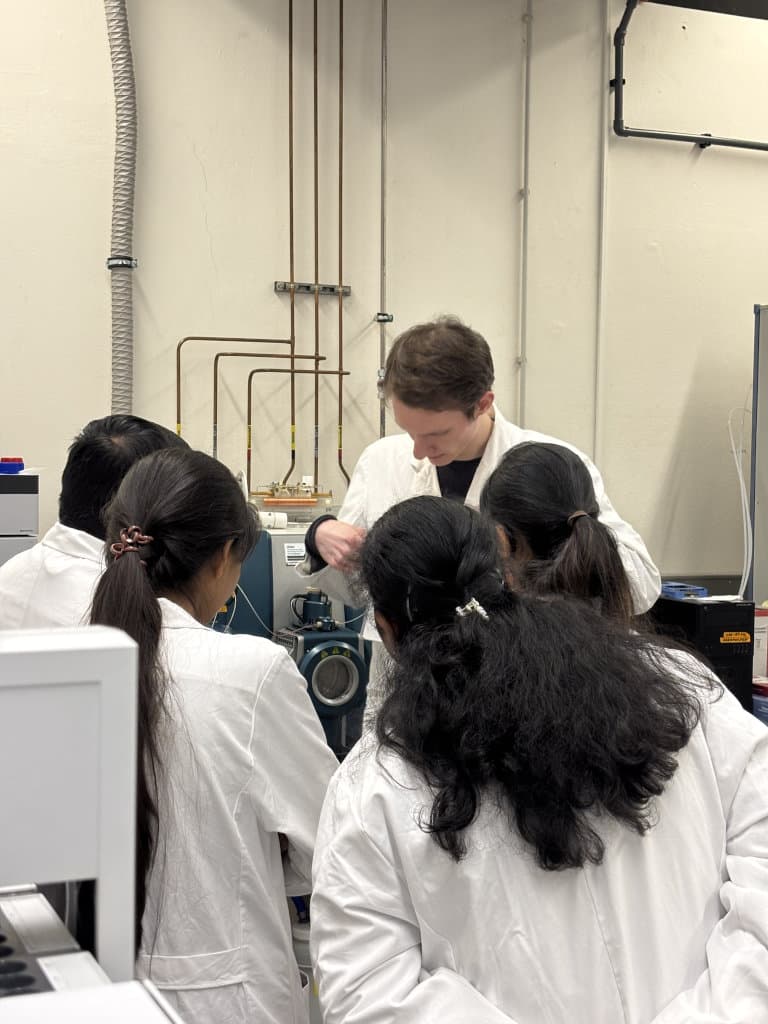
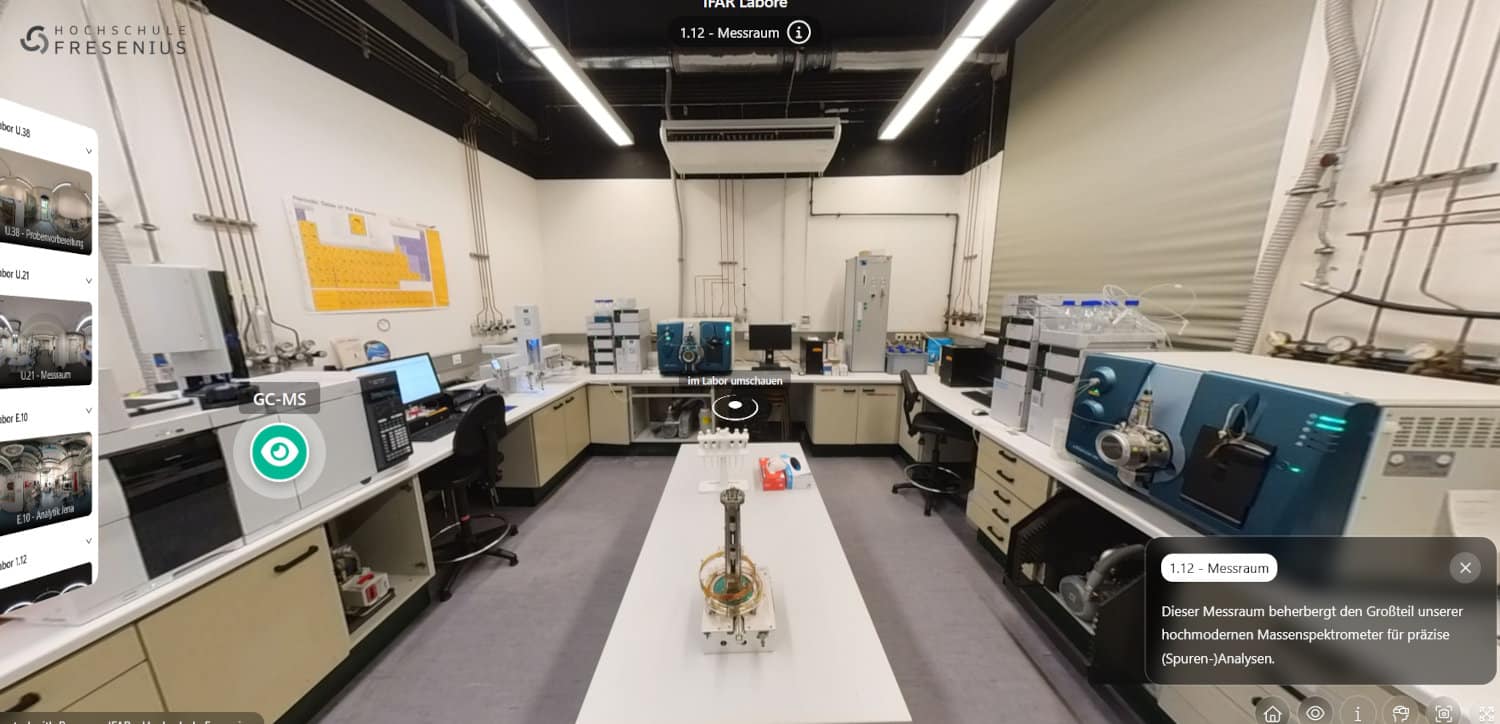
    Die Geräteausstattung des IFAR ist umfangreich und bedient vielfältige analytische Problemstellungen.

    Gerätepool (Auszug):

    • Orbitrap Velos Pro (HPLC-HR-MS)
    • 3 x HPLC-MS/MS
    • Q-TOF-MS
    • MALDI-TOF/TOF-MS
    • ContrAA HR-CS AAS (Analytik Jena®)
    • AAS (Analytik Jena®)
    • GC-MS und GC-MS/MS
    • HPLC-DAD
    • GPC
    • ASE
    • IC
    • ICP/OES (Analytik Jena®)
    • FT-IR
    • 200i IR Mikroskopiesystem
    • PCR
    • ELISA

    Das IFAR verfügt über mehrere Laborräume, in denen sich die Ausstattung zur Probenvorbereitung und Messung der Proben befindet. Das Spektrum der messbaren Substanzen ist groß, validierte Analysenmethoden sind vorhanden und stehen auch für Routine-Untersuchungen zur Verfügung.

    Messbare Substanzen, Auswahl:

    • Pflanzenschutzmittel und Transformationsprodukte
    • Perfluorierte und polyfluorierte Chemikalien und Transformationsprodukte
    • Tenside und Detergentien und Transformationsprodukte
    • Arzneimittelwirkstoffe und Transformationsprodukte
    • Personal Care Produkte und Transformationsprodukte
    • Industriechemikalien und Transformationsprodukte
    • Synthetische Polymere, Mikroplastik
    • Anorganische Kationen und Anionen
    IFAR Pyramide

    FG „Sustainable Technologies and Environmental Analytics“

    Prof. Dr. Stephan Wagner (Leiter Forschungsgruppe)

    Unsere Kernkompetenz liegt in der Anwendung fortschrittlicher Analysemethoden zur Bewältigung von Herausforderungen an der Schnittstelle zwischen Technologie und ökologischer Nachhaltigkeit. Unser Fokus liegt auf der Entwicklung und Anwendung modernster Methoden zur Bewertung und Verbesserung von Chemikalien, Materialien und Verfahren zur Wasseraufbereitung. Im Kern geht es uns um die Minimierung der Umweltauswirkungen bei gleichzeitiger Maximierung von Effizienz und Sicherheit.
    Das Team führt auch umfangreiche Forschungsarbeiten im Bereich der Umweltforensik durch. Wir analysieren dafür komplexe Umweltdaten, um Trends zu erkennen, Risiken zu mindern und faktenbasierte Entscheidungen zu treffen. Beispiele für aktuelle Forschungsfragen sind:

    • Was passiert mit Reifenabrieb in der Umwelt?
    • Wie können die Nachhaltigkeit und die Sicherheit neuer Chemikalien und Produkte bewertet werden?
    • Wie kann die Wasserqualität in einem Oberflächengewässer digital erfasst werden?
    • Was passiert mit illegal abgelagerten Abfällen aus der illegalen Drogenproduktion in der Umwelt?

    FG „Biomolecular Research“

    Prof. Dr. Klaus Schneider  (Leiter Forschungsgruppe)

    Unsere Forschungsgruppe entwickelt und verwendet innovative bioanalytische Werkzeuge, die auf biologische und biomedizinische Herausforderungen zugeschnitten sind. Unsere Innovationen im Bereich der bioanalytischen Methoden werden von dem ständigen Bestreben angetrieben, unsere Fähigkeit zum Verständnis und zur Manipulation biologischer Systeme für verschiedene Anwendungen, einschließlich Diagnostik, Therapeutik und Biotechnologie, zu verbessern. Unsere Forschungsaktivitäten umfassen die Entwicklung von Techniken zur Analyse von Biomolekülen, insbesondere für die Identifizierung und Charakterisierung von Proteinen und zellulären Stoffwechselprodukten. Darüber hinaus beschäftigen wir uns mit der Erforschung von Biomarkern und deren Anwendungen, um unser Verständnis biologischer Systeme zu verbessern und einen Beitrag zur medizinischen Diagnostik und Therapie zu leisten.

    FG „In vitro Toxicology“

    Prof. Dr. Iris Hermanns (Leiterin Forschungsgruppe)

    Die Forschungsgruppe fokussiert sich auf die In-vitro-Toxikologie, welche ethische Alternativen zu Tierversuchen bietet. Dabei werden kostengünstige und effiziente Methoden eingesetzt, welche schnelle Ergebnisse und mechanistische Einblicke in die zellulären Reaktionen auf Chemikalien liefern. Die Nachahmung der menschlichen Physiologie ermöglicht die Bereitstellung hochrelevanter Daten für die Bewertung von Risiken für die menschliche Gesundheit. Unsere Forschungsgruppe arbeitet mit Aufsichtsbehörden und der Industrie zusammen, um wichtige in-vitro-Daten für die Zulassung von Chemikalien bereitzustellen. Letztlich trägt unsere Arbeit zur Produktsicherheit und zum Schutz der menschlichen Gesundheit und der Umwelt bei.

    FG „Applied and Sustainable Photochemistry“

    Prof. Dr. Michael Oelgemöller (Leiter Forschungsgruppe)

    Unsere Forschungsschwerpunkte liegen in der Photochemie, der solaren Produktion von Feinchemikalien sowie der modernen Durchfluss-Photochemie. Dabei fokussieren wir uns auf die Nutzung erneuerbarer Rohstoffe wie ätherische Öle und landwirtschaftliche Abfälle für die Herstellung von Arzneimitteln, Kosmetika und Zusatzstoffen in der Lebensmittelindustrie. Die Erforschung der photokatalytischen Synthese zielt darauf ab, aus Fettsäuren und Abfallfetten Biodieselkraftstoffe herzustellen und photoaktive Materialien für die Synthesechemie zu entwickeln. Gegenwärtig umfasst unsere Forschung die Prüfung der Photostabilität von Materialien und die Untersuchung des Abbaus organischer Schadstoffe in verschiedenen Wasserquellen, einschließlich Arzneimittel- und Pestizidrückständen. Des Weiteren fokussieren wir uns auf die nachhaltige Desinfektion von Wasser und Futtermitteln für die Aquakultur, wodurch ein Beitrag zur weltweiten Nahrungsmittelproduktion geleistet wird.

    FG „Sustainability accounting & Chempreneurship“

    Dr. Victoria Freund (Leiterin Forschungsgruppe)

    Wir sind Spezialisten auf dem Gebiet der Nachhaltigkeitsbilanzierung. Unser Forschungsauftrag besteht darin, die Auswirkungen von Geschäftsaktivitäten auf Umwelt-, Sozial- und Management-Kriterien zu quantifizieren und in die Finanzberichterstattung zu integrieren. Wir konzentrieren uns auf die Entwicklung von Methoden zur Bewertung von Nachhaltigkeitsaktivitäten, um dem Vorwurf des „Greenwashing“ zu begegnen. Darüber hinaus sind wir Chempreneurs. Wir untersuchen die Barrieren des Technologietransfers von der Naturwissenschaft in die Wirtschaft und schaffen dabei ein erfolgreiches unternehmerisches Umfeld. Durch die Entwicklung und Evaluierung von Projektformaten sowie durch Umfragen unter Chemie- und MINT-Studenten wollen wir die Möglichkeiten des Technologietransfers verbessern und das Unternehmertum unter Wissenschaftlern fördern.

    FG „Digital Forensics“

    Prof. Dr. Dirk Labudde (Leiter Forschungsgruppe)

    Die Digitale Forensik stellt eine wichtige Disziplin innerhalb der forensischen Wissenschaft dar, welche sich mit der Untersuchung, Analyse und Wiederherstellung digitaler Daten aus einem Spektrum von elektronischen Geräten und Medien befasst. Unser Team setzt spezielle Methoden und Werkzeuge ein, um Beweise von Computern, mobilen Geräten und Netzwerken zu sammeln und zu sichern. Unsere Dienstleistungen umfassen die Aufdeckung von Beweisen im Zusammenhang mit Cyberkriminalität wie Hacking, Betrug und Diebstahl von geistigem Eigentum. Diese spielen eine entscheidende Rolle bei der Strafverfolgung, bei Gerichtsverfahren und bei Ermittlungen im Bereich der Cybersicherheit. Die Aufklärung digitaler Aktivitäten dient der Sicherung der Integrität digitaler Beweise, der Erhöhung der Glaubwürdigkeit von Gerichtsverfahren sowie dem Schutz vor Cyber-Bedrohungen.

    Forschungsprojekte

    Die akquirierten Projekte des IFAR sind:

    • Öffentliche Forschungsprogramme auf nationaler oder internationaler Ebene
    • F & E-Gelder der Industrie, die zunehmend Forschung und Entwicklung fremd vergibt
    • Auftragsforschung

    Aktuelle Projekte


    Abgeschlossene Projekte

    Publikationen

    Steinbach, M. K., Müller, H., Reichard, Y., Eulberg, K., Frömel, T., Lein, A., Peter, C., Prager, K., & Grimmler, M.: Evaluation of an enzymatic one-step assay for Beta-Hydroxybutyrate blood testing on clinical chemistry platforms using HILIC-MS/MS as a non-enzymatic reference method. Clinica Chimica Acta 2026, 580. https://doi.org/10.1016/j.cca.2025.120703.

    • Yaseen, M. A.; Guo, Z.; Junk, P. C.; Oelgemöller, M.: [2+2]-Photocycloadditions of 2-Acetoxy-1,4-Naphthoquinone and Structure Determination of the Main Photoadducts. Photochem 2025, 5 (4), 31. https://doi.org/10.3390/photochem5040031.
    • Greif, M.; Rosin, J.; Rößler, T.; Knepper, T. P.; Huhn, C.; Wagner, S.; Pütz, M.: Method Development for the Analysis of Synthesis Markers from Clandestine Amphetamine Production via the Leuckart Route in Wastewater Using Polydimethylsiloxane Rods for Passive Sampling in Combination with GC-MS Techniques. Forensic Sci Int 2025, 377, 112659. https://doi.org/10.1016/J.FORSCIINT.2025.112659.
    • Rynek, R.; Tekman, M. B.; Veit-Köhler, G.; Wagner, S.; Reemtsma, T.; Jahnke, A.: Plastics from Surface to Seabed: Vertical Distribution of (Micro)Plastic Particles in the North Pacific Ocean. Environ Sci Technol 2025, 59 (48), 26145–26156. https://doi.org/10.1021/acs.est.5c11358.
    • Aman, R.; Freund, V.: Understanding AI Adoption in the German Pharmaceutical Sector: Insights from Expert Interviews. Intelligent Pharmacy 2025. https://doi.org/10.1016/j.ipha.2025.09.001.
    • Daubenfeld, T., Hasselbach, F., & Just, S.: Artificial Intelligence in the German Chemical and Pharmaceutical Industry: A Comparative Analysis of Empirical Survey Results. Laska 2025, 22(3). https://doi.org/10.17879/91948465351.
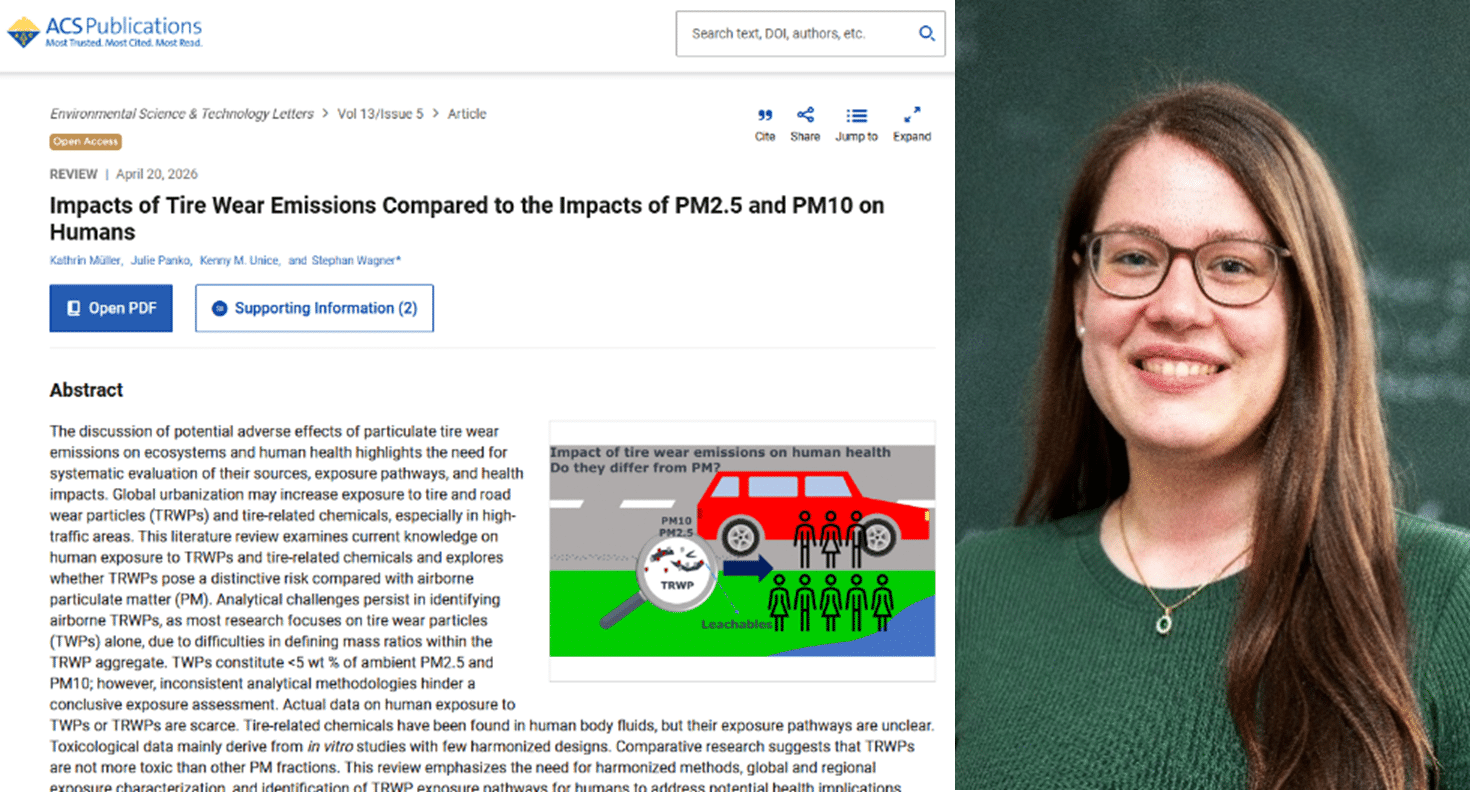
    • Müller, K.; Unice, K.; Panko, J.; Ferrari, B. J. D.; Breider, F.; Wagner, S. Risk Assessment of Tire Wear in the Environment – a Literature Review. Environmental Science: Processes and Impacts. Royal Society of Chemistry 2025. https://doi.org/10.1039/d5em00088b.
    • Müller, K.; Unice, K.; Panko, J.; Wagner, S. Tire Emissions during the Use Phase of Tires – Current and Future Trends. Environmental Science: Advances. Royal Society of Chemistry 2025. https://doi.org/10.1039/d4va00407h.
    • Faikhaw, O.; Wagner, S.; Rynek, R.; Peng, G.; Materić, D.; Reemtsma, T.: Oxidative Purification of Microplastics in Riverine Suspended Matter Samples — Solving the Challenge of Plant Debris Removal for Microplastic Analysis. Sci. Total Environ. 2025, 958, 177876. https://doi.org/10.1016/j.scitotenv.2024.177876
    • Daubenfeld, T. A.: Simple Board Game for Modeling the System Dynamics of Deforestation. Qeios 2025, 7 (1). https://doi.org/10.32388/U5Q11B.2
    • Bhat, M. A.; Radu, T.; Martín-Fabiani, I.; Kolokathis, P. D.; Papadiamantis, A. G.; Wagner, S.; Kohl, Y.; Witters, H.; Gebbink, W. A.; Rodriguez, Y. P.; Cardelini, G.; Degens, R.; Burzic, I.; Serrano, B. A.; Pretschuh, C.; Santamaría-Aranda, E.; Contreras-García, E.; Sinic, J.; Jocham, C.; Cohen, D.; Maor, Z.; Assis, A.; Panák, O.; Novak, U.; Hans, S.; Biesemeier, A.; Camilleri, P.; Sánchez, F. P.; Arblaster, T.; Thonemann, N.; Guinée, J.; Pipino, A.; Çelen, O.; Alwe, H.; Drexel, R.; Welz, R.; Meier, F.; Oliva, I. P.-L.; Tagorti, G.; Hardy, B.; Velimirovic, M.: Safe and Sustainable by Design of next Generation Chemicals and Materials: SSbD4CheM Project Innovations in the Textiles, Cosmetic and Automotive Sectors. Comput Struct Biotechnol J 2025, 29, 60–71. https://doi.org/10.1016/j.csbj.2025.03.022
    • Walther, S.; Haubold, S.; Dobrucka, R. The Characteristics of Successful Founders: Focus on Chemistry Students in Germany and Poland. Journal of Education and Development 2025, 9 (3), 38. https://doi.org/10.20849/jed.v9i3.1510.
    • Greif, M.; Frömel, T.; Knepper, T. P.; Huhn, C.; Wagner, S.; Pütz, M. Rapid Assessment of Samples from Large-Scale Clandestine Synthetic Drug Laboratories by Soft Ionization by Chemical Reaction in Transfer–High-Resolution Mass Spectrometry. J Am Soc Mass Spectrom 2025. https://doi.org/10.1021/jasms.5c00006.
    • Zhang, N.; Li, L.; Mohri, M.; Siebert, S.; Lütteke, T.; Louton, H.; Bednarikova, Z.; Gazova, Z.; Nifantiev, N.; Jandowsky, A.; Frölich, K.; Eckert, T.; Loers, G.; Petridis, A. K.; Bhunia, A.; Mohid, S. A.; Scheidig, A. J.; Liu, G.; Zhang, R.; Lochnit, G.; Siebert, H. C.: Protein – Carbohydrate Interaction Studies Using Domestic Animals as Role Models Support the Search of New Glycomimetic Molecules. Int J Biol Macromol 2024, 279, 134951. https://doi.org/10.1016/J.IJBIOMAC.2024.134951
    • Halsband C, Sørensen L, Khan FR, Herzke D, Wagner S: Editorial: Environmental impacts and risks of car tire and styrene-butadiene rubber: microplastic pollution and contaminant transport. Front. Environ. Sci. 2024, 11, 1355263. DOI: 10.3389/fenvs.2023.1355263
    • Kamel MSA, Oelgemöller M, Mohan VJ: Influence of deposition temperature and hydrogen on sustainable and transfer-free graphene transparent electrode for organic solar cells. FlatChem 2024, 44, 100627. DOI: 10.1016/j.flatc.2024.100627
    • Rynek R, Tekman M, Rummel C, Bergmann M, Wagner S, Jahnke A, Reemtsma T.: Hotspots of Floating Plastic Particles across the North Pacific Ocean. Environ. Sci. Technol. 2024, 58 (9), 4302–4313. DOI: 10.1021/acs.est.3c05039E
    • Wagner S, Funk CW, Müller K, Raithel DJ: The chemical composition and sources of road dust, and of tire and road wear particles–A review. Sci. Total Environ. 2024, 926, 171694. DOI: 10.1016/j.scitotenv.2024.171694
    • Müller K, Hartmann A, Zahn D, Wagner S, Knepper TP: Are Wastewater Treatment Plants an Effective Barrier Against Tire Leachables?–Biotransformation and Screening Experiments. Vom Wasser 2024, 122 (1), 12-14. DOI: 10.1002/vomw.202400003
    • Luederwald S, Davies J, Fernandes TF, Praetorius A, Sergen J-A, Tatsi K, Tell J, Timmer N, Wagner S: Practical considerations to optimize aquatic testing of particulate material, with focus on nanomaterials. Environ. Sci.: Nano 2024, 11, 2352-2371. DOI: 10.1039/d4en00056k
    • Kemp A, Durand M, Wall D, Szieber P, Hermanns I, Oelgemöller M: Synthesis of 1H‑isoindolin‑1‑ones via a simple photodecarboxylative addition of carboxylates to phthalimides and evaluation of their antibiotic activity. Photochem. Photobiol. Sci. 2024, 23, 1353–1360. DOI: 10.1007/s43630-024-00600-y
    • Perry MJ, Curic M, Scott AL, Ritmejerytė E, Rahayu DUC, Keller PA, Oelgemöller M, Yeshi K, Wangchu P: The In Vitro Antioxidant and Anti-Inflammatory Activities of Selected Australian Seagrasses. Life 2024, 14, 710. DOI: 10.3390/life14060710
    • Kamel M, Oelgemöller M, Jacob MV: Chemical vapor deposition-grown graphene transparent conducting electrode for organic photovoltaics: Advances towards scalable transfer-free synthesis. Renew. Sustain. Energy Rev. 2024, 203, 114740. DOI: 10.1016/j.rser.2024.114740
    • Muschket M, Neuwald I, Zahn D, Seelig AH, Kuckelkorn J, Knepper TP, Reemtsma T: Fate of persistent and mobile chemicals in the water cycle: From municipal wastewater discharges to river bank filtrate. Water Res. 2024, 266, 122436. DOI: 10.1016/j.watres.2024.122436
    • Bahamon N, Recasens L, Sala-Coromina J, Calero B, Garcia JA, Rotllant G, Maurer A, Rojas A, Muth L, Quevedo J, Vigo M, Ribera-Altimir J, Company JB: Selectivity-based management for reversing overexploitation of demersal fisheries in North-western Mediterranean Sea. Mar. Policy 2024, 165, 106185. DOI: 10.1016/j.marpol.2024.106185
    • Pauelsen F, Huppertsberg S, Knepper TP, Zahn D: Narrowing the analytical gap for water-soluble polymers: A novel trace-analytical method and first quantitative occurrence data for polyethylene oxide in surface and wastewater. Sci. Total Environ. 2023, 882, 163563. DOI: 10.1016/j.scitotenv.2023.163563
    • Masetto T, Matzenbach K, Reuschel T, Tölke SA, Schneider K, Esser LM, Reinhart M, Bindila L, Peter C, Grimmler M: Comprehensive Comparison of the Capacity of Functionalized Sepharose, Magnetic Core, and Polystyrene Nanoparticles to Immuno-Precipitate Procalcitonin from Human Material for the Subsequent Quantification by LC-MS/MS. Int. J. Mol. Sci. 2023, 24, 10963. DOI: 10.3390/ijms241310963
    • Rødland ES, Gustafsson M, Jaramillo-Vogel D, Järlskog I, Müller K, Rauert C, Rausch J, Wagner S: Analytical challenges and possibilities for the quantification of tire-road wear particles. TrAC, Trends Anal. Chem. 2023, 165, 117121. DOI: 10.1016/j.trac.2023.117121
    • Licul-Kucera V, Frömel T, Kruså M, van Wezel AP, Knepper TP: Finding a way out? Comprehensive biotransformation study of novel fluorinated surfactants. Chemosphere 2023, 339, 139563. DOI: 10.1016/j.chemosphere.2023.139563
    • Tölke SA, Masetto T, Reuschel T, Grimmler M, Bindila L, Schneider K: Immunoaffinity LC–MS/MS Quantification of the Sepsis Biomarker Procalcitonin Using Magnetic- and Polystyrene-Bead Immobilized Polyclonal Antibodies. J. Proteome Res. 2023, 22 (10), 3135-3148. DOI: 10.1021/acs.jproteome.3c00082
    • Mitrano DM, Bigalke M, Booth AM, Carteny C, Coffin S, Egger M, Gondikas A, Hüffer T, Koelmans AA, Lahive E, Mattsson K, Reynaud S, Wagner S: Training the next generation of plastics pollution researchers: tools, skills and career perspectives in an interdisciplinary and transdisciplinary field. Micropl.&Nanopl. 2023, 3, 24. DOI: 10.1186/s43591-023-00072-4
    • Müller K, Hübner D, Huppertsberg S, Knepper TP, Zahn D (2022): Probing the chemical complexity of tires: Identification of potential tire-borne water contaminants with high-resolution mass spectrometry. STOTEN 802:149799; doi: 10.1016/j.scitotenv.2021.149799
    • Hanslik L, Seiwert B, Huppertsberg S, Knepper TP, Reemtsma T, Braunheck T (2022): Biomarker responses in zebrafish (Danio rerio) following long-term exposure to microplastic-associated chlorpyrifos and benzo(k)fluoranthene; doi.org/10.1016/j.aqua rox. 2022.106120
    • Köke N, Greif M, Rößler T, Pütz M, Frömel T, Knepper TP (2022): Stability of selected substances related to the clandestine production of amphetamine-type stimulants in wastewater – identification of transformation products; doi.org/10.1016/j.talo.2022.100104
    • Neuwald I, Hübner D, Wiegand HL, Valkov V, Borchers U, Nödler K, Scheurer M, Hale SE, Arp PH, Zahn D (2022): Ultra-Short-Chain PFASs in the Sources of German Drinking Water: Prevalent, Overlooked, Difficult to Remove, and Unregulated; Environ. Sci. Technol. doi.org/10.1021/acs.est.1c07949
    • Köke N, Solano F, Knepper TP, Frömel T (2022): Unraveling the dynamics of organic micropollutants in wastewater: Online LC-MS/MS analysis at high temporal resolution. Environmental Pollution 310 (2022) 119807.
    • Krais S, Anthes N, Huppertsberg S, Knepper TP, Peschke K, Ruhl AS, Schmieg H, Schwarz T, Köhler HR, Triebskorn R (2022): Polystyrene Microplastics Modulate the Toxicity of the Hydrophilic Insecticide Thiacloprid for Chironomid Larvae and Also Influence Their Burrowing Behavior. Microplastics 2022, 1, 505–519, doi.org/10.3390/microplastics1030036
    • Hanslik L, Huppertsberg S, Kämmer N, Knepper TP, Braunbeck T (2022). Rethinking the relevance of microplastics as vector for anthropogenic contaminants: Adsorption of toxicants to microplastics during exposure in a highly polluted stream – Analytical quantification and assessment of toxic effects in zebrafish (Danio rerio), Science of The Total Environment, Volume 816, 2022, 151640
    • Müller K, Hübner D, Huppertsberg S, Knepper TP, Zahn D: Reifenabrieb als Quelle für Umweltkontaminanten – Suspect- und Non-Target-Screening von Reifenextrakten. Vom Wasser 119 3:97–102 (2021) doi: 10.1002/vomw.202100022
    • Hehet P, Köke N, Zahn D, Frömel T, Rößler T, Knepper TP, Pütz M (2021): Synthetic cannabinoid receptor agonists and their human metabolites in sewage water: Stability assessment and identification of transformation products. Drug Test Anal. 1–10, doi: 10.1002/dta.3129
    • Neuwald IJ, Muschket M, Zahn D, Berger U, Seiwert B, Meier T, Kuckelkorn J, Strobel C, Knepper TP, Reemtsma T (2021): Filling the knowledge gap: A suspect screening study for 1310 potentially persistent and mobile chemicals with SFC and HILIC in two German river systems. Water Res. 204:117645. doi: 10.1016/j.watres.2021.117645
    • Greif M, Köke N, Pütz M, Rößler T, Knepper TP, Frömel T (2021): Nontarget screening of production waste samples from Leuckart amphetamine synthesis using liquid chromatography -high-resolution mass spectrometry as a complementarymethod to GC-MS impurity profiling. Drug Testing and Analysis. doi:org/10.1002/dta.3224
    • Zahn D, Frömel T (2020): Finding a needle in a haystack—analyte-driven tools and techniques for information extraction and prioritization of chemicals from environmental (chromatography-)HRMS nontarget screening data. Current Opinion in Environmental Science & Health 18:70–78 (2020) doi: 10.1016/j.coesh.2020.09.005
    • Huppertsberg S, Knepper TP (2020): Validation of an FT-IR microscopy method for the determination of microplastic particles in surface waters. MethodsX, 7:100874 doi: 10.1016/j.mex.2020.100874
    • Knepper TP, Reemtsma T, Schmidt TC. (2020): Editoral: Persistent and mobile organic compounds—an environmental challenge. Anal Bioanal Chem 412:4761–4762 doi: 10.1007/s00216-020-02542-7
    • Müller K, Zahn D, Frömel T, Knepper TP (2020): Matrix effects in the analysis of polar organic water contaminants with HILIC-ESI-MS. Anal Bioanal Chem 412:4867-4879, doi: 10.1007/s00216-020-02548-1
    • Knepper TP (2020): Mikroplastik auf dem Mond. Editoral. Vom Wasser 118:1
    • Hanslik L, Sommer C, Huppertsberg S, Dittmar S, Knepper TP, Braunbeck T (2020): Microplastic-associated trophic transfer of benzo(k)fluoranthene in a limnic food web: Effects and alterations in freshwater invertebrates (Daphnia magna, Chironomus riparius) and zebrafish (Danio rerio) excepted Comp. Biochem. Physiol. C: Toxicol. Pharmacol 237:108849, doi:10.1016/j.cbpc.2020.108849
    • Huppertsberg S, Zahn D, Pauelsen F, Reemtsma T, Knepper TP (2020): Making Waves: Water-soluble polymers in the aquatic environment: An overlooked class of synthetic polymers? Water Res. 181:115931, doi:10.1016/j.watres.2020.115931
    • Schmieg H, Huppertsberg S, Knepper TP, Krais S, Reitter K, Rezbach F, Ruhl AS, Köhler H-R, Triebskorn R (2020): Polystyrene microplastics do not affect juvenile brown trout (Salmo trutta f. fario) or modulate effects of the pesticide methiocarb. Environ Sci Eur 32, 49, doi:10.1186/s12302-020-00327-4
    • Neuwald IJ, Zahn D, Knepper TP (2020): Are (fluorinated) ionic liquids relevant environmental contaminants? High-resolution mass spectrometric screening for per- and polyfluoroalkyl substances in environmental water samples led to the detection of a fluorinated ionic liquid. Anal. Bioanal. Chem. 412:4881–4892, doi:10.1007/s00216-020-02606-8
    • Zahn D, Neuwald IJ, Knepper TP (2020): Analysis of mobile chemicals in the aquatic environment—current capabilities, limitations and future perspectives in Special Issue on Environmental Analysis of Persistent and Mobile Organic Compounds (Eds. Schmidt TC, Knepper TP, Reemtsma T) Anal. Bioanal. Chem. 412:4763-4784, doi:10.1007/s00216-020-02520-z
    • Janousek RM, Müller J, Knepper TP (2020): Combined study of source, environmental monitoring and fate of branched alkylphenols: The chain length matters. Chemosphere 241:124950, doi:10.1016/j.chemosphere.2019.124950
    • Barcelo D, Knepper TP (2019): Analysis, fate and effects of microplastics in the environment: Preface to article collection. Special Issue on Analysis of Micro(nano) plastics in the environment (Eds. Barcelo D, Knepper TP) Trends Anal. Chem. 121:115671, doi:10.1016/j.trac.2019.115671
    • Zahn D, Meusinger R, Frömel T, Knepper T (2019): Halomethanesulfonic Acids-A New Class of Polar Disinfection Byproducts: Standard Synthesis, Occurrence, and Indirect Assessment of Mitigation Options. Environ. Sci. Technol. 53:8994−9002 doi:10.1021/acs.est.9b03016
    • Janousek RM, Lebertz S, Knepper TP (2019): So far unidentified sources of perfluoroalkyl and polyfluoroalkyl substances: Building materials and industrially used fabrics. Environ Sci Process Impacts. Environ. Sci.: Processes Impacts 21:1936-1945 doi:10.1039/c9em00091g.
    • Münster-Müller S, Matzenbach I, Knepper TP, Zimmermann R, Pütz M: Profiling of synthesis-related impurities of the synthetic cannabinoid Cumyl-5F-PINACA in seized samples of e-liquids via multivariate analysis of UHPLC/MSn data. Drug Test Anal.1–8 (2019) doi:10.1002/dta.2673
    • Gros L, Knepper TP: The flame—not the ashes: achievements and heritage of a passionate analytical chemist. Anal. Bioanal. Chem. 411:1927–1933 (2019) doi:10.1007/s00216-019-01647-y
    • Triebskorn R, Braunbeck T, Grummt T, Hanslik L, Huppertsberg S, Jekel M, Knepper TP, Krais S, Müller YK, Pittroff M, Ruhl AS, Schmieg H, Schür C, Strobel C, Wagner M, Zumbülte N, KohleHR: Relevance of nano- and microplastics for freshwater ecosystems: A critical review. Trends Anal. Chem. 110:375-392 (2019) doi:10.1016/j.trac.2018.11.023
    • Schulze S, Zahn D, Montes R, Rodil R, Quintana JB, Knepper TP, Reemtsma T, Berger U: Occurrence of emerging persistent and mobile organic contaminants in European water samples. Water Res. 153: 80-90 (2019) doi:10.1016/j.watres.2019.01.008
    • Janousek RM, Mayer J, Knepper TP: Is the phase-out of long-chain PFASs measurable as fingerprint in a defined area? Comparison of global PFAS concentrations and a monitoring study performed in Hesse, Germany from 2014 to 2018. Trends Anal. Chem. 120 (2019) 115393 doi:10.1016/j.trac.2019.01.017
    • Zahn D, Mucha P, Zilles V,.Touffet A; Gallard H, Knepper TP, Frömel T (2018): Identification of potentially mobile and persistent transformation products of REACH-registered chemicals and their occurrence in surface waters. Water Res., doi:10.1016/j.watres.2018.11.042
    • Ritscher et. Al (2018): Zürich Statement on Future Actions on Per- and Polyfluoroalkyl Substances (PFASs). Environ. Health Perspect. 126(8):084502-1-084502-5, doi:10.1289/EHP4158
    • Huppertsberg S, Knepper, TP (2018): Instrumental analysis of microplastics—benefits and challenges. Anal Bioanal. Chem. 410(25):6343–6352, doi:10.1007/s00216-018-1210-8
    • Dimzon IKD, Morat AS, Müller J, Yanel RK, Lebertz S, Weil H, Perez TR, Müller J, Dayrit FM, Knepper TP (2018): Trace organic chemical pollutants from the lake waters of San Pablo City, Philippines by targeted and non-targeted analysis. Sci. Total Environ. 639(15):588-595, doi:10.1016/j.scitotenv.2018.05.217
    • Llorca M, Farré M, Sànchez-Melsió A, Villagrasa M, Knepper TP, Barceló D (2018): Perfluoroalkyl phosphonic acids adsorption behaviour and degradation by wastewater organisms, Sci. Total Environ. 636:273–281, doi:10.1016/j.scitotenv.2018.04.271
    • Köke N, Zahn D, Knepper TP, Frömel T (2018): Multi-layer solid-phase extraction and evaporation – enrichment methods for polar organic chemicals from aqueous matrices. Anal. Bioanal. Chem. 410:2403-2411, doi:10.1007/s00216-018-0921-1
    • Gremmel C, Frömel T, Knepper TP (2017): HPLC–MS/MS methods for the determination of 52 perfluoroalkyl and polyfluoroalkyl substances in aqueous samples. Anal Bioanal Chem 409:1643–1655 doi:10.1007/s00216-016-0110-z
    • Dimzon IKD, Westerveld J, Gremmel C, Frömel T, Knepper TP, de Voogt P (2017): Sampling and simultaneous determination of volatile per- and polyfluoroalkyl substances in wastewater treatment plant air and water. Anal Bioanal Chem 409: 1395-1404, doi:10.1007/s00216-016-0072-1
    • Reemtsma T, Berger U, Arp HPH, Gallard H, Knepper TP, Neumann M, Quintana JB, de Voogt P (2016): Mind the Gap: Persistent and Mobile Organic Compounds – Water Contaminants That Slip Through. Environ Sci Technol 50:10308−10315, doi:10.1021/acs.est.6b03338
    • Dimzon IKD, Frömel T, Knepper TP (2016): Characterization of 3-Aminopropyl Oligosilsesquioxane. Anal Chem 88(9):4894-902, doi:10.1021/acs.analchem.6b00732
    • Gremmel C, Frömel T, Knepper TP (2016): Systematic determination of perfluoroalkyl and polyfluoroalkyl substances (PFASs) in outdoor jackets. Chemosphere 16:173-180, doi:10.1016/j.chemosphere.2016.06.043
    • Zahn D, Frömel T, Knepper TP (2016): Halogenated methanesulfonic acids: A new class of organic micropollutants in the water cycle. Water Res 101:292-299, doi:10.1016/j.watres.2016.05.082
    • Dimzon IKD, Trier X, Frömel T, Helmus R, Knepper TP, de Voogt P (2016): High Resolution Mass Spectrometry of Polyfluorinated Polyether – based Formulation. J American Society Mass Spectrometry 27:309-318, doi:10.1007/s13361-015-1269-9
    • Frömel T, Knepper TP (2015): Aerobic biotransformation studies of two trifluoromethoxy-substituted aliphatic alcohols and a novel fluorinated C3-based building block. J Fluorine Chem 177:80–89 doi:10.1016/j.jfluchem.2015.06.015
    • Klein S, Worch E, Knepper TP (2015): Occurrence and spatial distribution of microplastic in river shore sediments of the Rhine-Main area in Germany. Environ Sci Technol 49:6070−6076
    • Dimzon IKD, Knepper TP (2015): Degree of deacetylation of chitosan by infrared spectroscopy and partial least squares. Int J Biol Macromol 72:939-945
    • Tetko IV, Schramm KW, Knepper TP, Peijnenburg WJGM, Hendriks AJ, Navas JM, Nicholls IA, Öberg T, Todeschini R, Schlosser E, Brandmaier S (2014): Experimental and Theoretical Studies in the EU FP7 Marie Curie Initial Training Network Project, Environmental ChemOinformatics (ECO). ATLA 42(1):7-11
    • Ieromina O, Peijnenburg WJGM, de Snoo G, Müller J, Knepper TP (2014): Impact of Imidacloprid on Daphnia Magna under different food quality regimes. Environ Tox Chem 33(3):621–631, doi:10.1002/etc.2472
    • Periša M, Babić S, Škorić I, Frömel T, Knepper TP (2013): Photodegradation of sulfonamides and their N4-acetylated metabolites in water by simulated sunlight irradiation: Kinetics and identification of photoproducts. Environ Sci Pollut Res, doi:10.1007/s11356-013-1836-1
    • Dimzon IKD, Ebert J, Knepper TP (2013): The Interaction of Chitosan and Olive Oil: Effects of Degree of Deacetylation and Degree of Polymerization. Carbohydrate Polymers 92:564–570, doi:10.1016/j.carbpol.2012.09.035
    • Ding GH, Frömel T, van den Brandhof EJ, Baerselman R, Peijnenburg WJGM (2012): Acute toxicity of poly- and perfluorinated compounds to two cladocerans, Daphnia magna and Chydorus sphaericus. Environ Tox Chem 31(3):605-610, doi:10.1002/etc.1713
    • Garcia M, Frömel T, Müller J, Peschka M, Knepper TP, Diaz-Cruz S, Barceló D (2012): Biodegradation studies of N4-Acetylsulfapyridine and N4-Acetylsuflamethazine in environmental water applying mass spectrometry techniques. Anal Bioanal Chem 402(9):2885–2896, doi:10.1007/s00216-012-5751-y
    • Llorca M, Farré M, Picó Y, Müller J, Knepper TP, Barceló D (2012): Analysis of perfluoroalkyl substances in waters from Germany and Spain. Sci Total Environ 431:139–150 doi:10.1016/j.scitotenv.2012.05.011
    • Gellrich V, Stahl T, Knepper TP (2012): Behavior of perfluorinated compounds in soils during leaching experiments. Chemosphere 87:1052-1056, doi:10.1016/j.chemosphere.2012.02.011
    • Frömel T, Knepper TP (2010): Biodegradation of fluorinated alkyl substances. Rev Environ Contam Toxicol 208:161-177 doi:10.1007/978-1-4419-6880-7_3
    • Frömel T, Knepper TP (2010): Fluorotelomer ethoxylates: Sources of highly fluorinated environmental contaminants Part I: Biotransformation. Chemosphere 80(11):1387-1392, doi:10.1016/j.chemosphere.2010.06.002
    • Eubeler J, Bernhard M, Zok S, Knepper TP (2010): Environmental biodegradation of synthetic polymers – Part II: biodegradation of different polymer groups. TrAC 29 (1):84-100, doi:10.1016/j.trac.2009.09.005
    • Nieto A, Peschka M, Borrull F, Pocurull E, Marcé RM, Knepper TP (2010): Phosphodiesterase Type V Inhibitors: Occurrence and fate in Wastewater. Water Res 44 (5):1607-1615, doi:10.1016/j.watres.2009.11.009
    • Eubeler J, Bernhard M, Zok S., Knepper TP (2009): Environmental biodegradation of synthetic polymers – Part I: Test methodologies and procedures. TrAC 28 (9):1057-1072, doi:10.1016/j.trac.2009.06.007
    • Buttiglieri G, Peschka M, Frömel T, Müller J, Malpei F, Seel P, Knepper TP (2009): Environmental occurrence and degradation of the herbicide n-chloridazon. Water Res 43:2865–2873 doi:10.1016/j.watres.2009.03.035
    • Bernhard M, Eubeler J, Zok S., Knepper TP (2008): Aerobic biodegradation of polyethylene glycols of different molecular weights in wastewater and seawater. Water Res 42:4791–4801 doi:10.1016/j.watres.2008.08.028
    • Frömel T, Knepper TP (2008): Mass Spectrometry as an indispensible tool for Biodegradation Studies of Surfactants. TrAC, special issue entitled “Advanced mass spectrometric analysis of metabolites and degradation products” 27 (11):1091-1106, doi:10.1016/j.trac.2008.09.012
    • Frömel T, Peschka M, Fichtner N., Hierse W, Kleineidam M, Bauer KH, Knepper TP (2008): Simultaneous aerobic biotransformation study and synthesis of ω-(bis(trifluoromethyl)amino)alkane-1-sulfonates. Rapid Commun Mass Spectrom 22:3957-3967, doi:10.1002/rcm.3797
    • Terziċ S, Senta I, Ahel M, Gros M, Petroviċ M, Barcelo D, Müller J, Knepper TP, Martí I, Ventura F, Jovancic P, Jabucar D (2008): Occurrence and Fate of Emerging Wastewater Contaminants in Western Balkan Region. Sci Total Environ 399:66–77, doi:10.1016/j.scitotenv.2008.03.003
    • Peschka M, Fichtner N, Hierse W, Kirsch P, Montenegro E, Seidel M, Wilken RD, Knepper TP (2008): Synthesis and analytical follow-up of the mineralization of a new fluorosurfactant prototype (Dedicated to Prof. Dr. Klaus Haberer on occasion of his 80th birthday). Chemosphere 72:1534–1540, doi:10.1016/j.chemosphere.2008.04.066
    • Peschka M, Frömel T, Fichtner N, Hierse W, Kleineidam M, Montenegro E, Knepper TP (2008): Mechanistic studies in biodegradation of the new synthesized fluorosurfactant 9-[4-(trifluoromethyl)phenoxy]nonane-1-sulfonate. J Chrom A 1187:79–86, doi:10.1016/j.chroma.2008.02.007
    • Bernhard M, Müller J, Knepper TP (2006): Biodegradation of persistent polar pollutants in wastewater: Comparison of an optimised lab-scale membrane bioreactor and activated sludge treatment. Water Res 40, 3419-3428, doi:10.1016/j.watres.2006.07.011
    • González S, Müller J, Petrovic M, Barceló D, Knepper TP (2006): Biodegradation studies of selected priority acidic pesticides and diclofenac in different bioreactors. Environ Pollut 144 (3):926-923, doi:10.1016/j.envpol.2006.02.021
    • Peschka M, Eubeler JP, Knepper TP (2006): Occurrence and fate of barbiturates in the aquatic environment. Environ Sci Technol 40 (23), 7200-7206, doi:10.1021/es052567r
    • Reemtsma T, Weiss S., Mueller J, Petrovic M, González S, Barcelo D, Ventura F, Knepper TP (2006): Polar pollutants entry into the water cycle by municipal wastewater: A European perspective. Environ Sci Technol 40 (17) :5451 – 5458, doi:10.1021/es060908a
    • Knepper TP, Werner A, Bogenschütz G (2005): Determination of synthetic chelating agents in surface and waste water by ion chromatography–mass spectrometry. J Chrom A 1085 (2):240-246, doi:10.1016/j.chroma.2005.06.045
    • Kruawal K, Sacher F, Werner A, Müller J, Knepper TP (2005): Chemical water quality in Thailand and its impacts on the drinking water production in Thailand. Sci Total Environ 340 (1-3):57-70, doi:10.1016/j.scitotenv.2004.08.008
    • Knepper TP (2004): Analysis and fate of insect repellents. Wat Sci Technol 50 (5):301-308
    • Knepper TP, Barcelo D, Lindner K, Seel P, Reemtsma T, Ventura F, De Wever H, van der Voel E, Gehringer P, Schönerklee M (2004): Removal of persistent polar pollutants through improved treatment of wastewater effluents. Wat Sci Technol 50 (5):195-202
    • De Wever H, Van Roy S, Dotremont C, Müller J , Knepper TP (2004): Comparison of linear alkylbenzene sulfonates removal in conventional activated sludge systems and membrane bioreactors. Wat Sci Technol 50 (5):219-225
    • Knepper TP (2004): Analysis and mass spectrometric characterization of the insect repellent Bayrepel and its main metabolite Bayrepel-acid. J Chrom A 1046 (1-2):159-166, doi:10.1016/j.chroma.2004.06.067
    • Schleheck D, Knepper TP, Fischer K, Cook AM (2004): Mineralization of individual congeners of linear alkylbenzenesulfonate by defined pairs of heterotrophic bacteria. Appl Environ Microbiol 70 (7):4053-4063
    • Dong W, Eichhorn P, Radajewski S, Schleheck D, Denger K, Knepper TP, Murell JC, Cook AM (2004): Parvibaculum lavamentivorans converts linear alkybenzenesulfonate surfactant to sulfophenylcarboxylates, α,β-unsaturated sulfophenylcarboxylates and sulfophenyldicarboxylates, which are degraded in communities. J Appl Microbiol 96 (3):630-640, doi:10.1111/j.1365-2672.2004.02200.x